Monday, March 3, 2014

The Month of March: In like a Lion Out like Lamb; Get Organized Become Productive

Organization and productivity go hand-in-hand. And the truth is there's a difference in getting things done and being productive. Organization is key to long-term productivity.
While this month comes in with roar many people start off with clean slate, which gives them opportunities to create the “new you.” This is a great way to start something new and it can help you become organized. Some of the most successful people in the world are habitual and organized. Boring? Yes. Effective? Absolutely.
And at times I will admit that I do become a bit obsessed with being organized.However I do it in the end because it makes me feel good, positive and successful. The truth is, I need those type of days to get organized—even if they are organized with blocks of free time—for me, organization is key.
A few reasons to be organized:
  1. Trustworthiness: Trust is necessary in all facets of life. Relationships—business and personal—are established and continued based on trust. Being organized will help you keep commitments, manage and prioritize relationships, and maintain a reputation for being reliable.
  2. Stress: Stress is in excess all around us. Being organized is a habit, and habits help us to deal with all the stress in our lives. Even when things are busy and spiraling a bit out of control, you can rely on your organized system and stress less about the little things.
  3. Effectiveness: Being organized leads to being effective and tackling what is in front of you with a greater focus. It allows you to be single-task oriented dedicating your full focus to the task (big or small) at hand.
But organization doesn't come naturally to everyone. Everyone has their own ways, but there are a few essentials we all need to get and stay organized.
How to get organized:
  1. Passwords: There are too many passwords in the world to keep track of. Make a list of all of your passwords that you can access from anywhere (easy accessibility is a must!) and make sure you update it regularly. App suggestion: 1Password
  2. To-do list: Make a to-do list every day. Putting things on paper (physical paper or on a screen) is the easiest way to see what you have to do right in front of you. It’s the best way to prioritize and knock things off the list as you get them done. App suggestion: Workflow
  3.  Documents: Documents control our lives these days. Personal, financial or work related—our lives are filled with documents. Organized them. Give them folders and put them in their correct place. App suggestion: DropBox
How to stay organized:
  1. Don’t procrastinate: Procrastination leads to disorganization and an overwhelming amount of things to do. Prioritize your to-do list and get it done. This will lead to productive days, every day.
  2. Stick to your system: Make being organized a priority and stick to it. Having a reliable, organized system you can rely on will only help in every aspect of life.
  3. Designate a place for everything: Finding and using a tool/method is easy—making a habit of it is hard. Even if it means creating a new folder or location for something that just popped up, give it a place to live, and the repeat.
And there's no better time than the present, so go get organized!

Sunday, March 2, 2014

Online Review Sites: Real People, Real Reviews or Just Spam?

Online review sites have been popping up right and left. However, Yelp has been the king of them for some time.
Just recently Yelp was named one of the top 10 innovative companies to watch by FastCompany.  With more than 117 million monthly users, this online service offers reviews from restaurants to doctors and has over 47 million online reviews and counting. 
But how did they become so successful? Yelp's developers are not just extremely insightful, but they've started to recognize the delight which people share information online and have capitalized on the notion of letting people connect this to their own identity.  Now Yelp users are able to do more with the site than rant about horrible service they've received at House of Waffles.
Nonetheless the social aspect of Yelp has allowed those to sign up and connect to one another on more personal level through the forums. This gives people the opportunity to get to know their neighbors in a virtual sense and learn to trust their judgment.  This platform allows users to get what they want while strengthening the primary structure of the website. But the truth is, the tagline really says it all.
Yelp also has an intense spam filter that might actually be considered a little over doing it However you won’t find that on City Search, which is littered with made up reviews from companies hired by other companies trying to push crappy products or services upon people they must consider extremely gullible idiots.  At times, I’d prefer to not have the filter on Yelp until my profile is established than to try to sift through the garbage on a site like City Search, which is actually doesn't really work. 
Yelp’s Fatal Weakness: 
However there is one aspect of Yelp that makes me want to tear my hair out.  If you've ever wanted to experience a nightmare in real life than try and update the information for your business.  That content is often “locked” by the administrators.  And getting someone on the phone to change it for you is nearly impossible because Yelp, like the head cheerleader from your high school days, their too busy for your phone calls.
However Angie’s List excels in this department.  I was shocked to discover that when calling them for an info update, a real live person answered the phone on the first ring! Soon after I was transferred to another human without any hold time or ridiculous music.  And here’s how the conversation went once that polite fellow picked up:
Customer Service Representative: Hello, what’s the name of the business?
Me[I told him]
Customer Service Representative: Okay let me pull that up… Oh, it looks like there are multiple listings of this business, I’ll send a request to merge those. What can I help you with today?
Me: Uh that was it and you’re awesome.
Customer Service Representative[laughing] We hope to provide the best level of service to our clients, given the nature of our business.
Me: Hmmm do you think you can you get a hold of Yelp for me?
The truth is, Yelp has to much on their plate, like Facebook. Got an issue with Facebook? You can waste an hour scouring the unhelpful FAQs, but you definitely won't be able talk to someone from the company.
Don’t get me wrong, Yelp is extremely useful, and however I hope they don’t over-extend their services the way Facebook has done.  They stand behind their position to allow free speech without allowing businesses to hush it up with bribes. Plus their open to criticism that they receive on their Yelp review page. And there’s a ton.
Yelp’s has a straight business model. So long as they don’t get greedy, the entire US will be Yelping in no time!

Saturday, March 1, 2014

Brand Mascots: Hate them or Love them?

In today's society, brand mascots have been used effectively as communication tools for consumer brands. These communication tools often spark conversations and trend on social media websites, but with all the hype that surrounds brand mascots evidence is much more than just talk. 

According to an article published in June 2013 in USA Today, brand mascots garner much more related social buzz than celebrity  spokesman. For example, the Pillsbury Doughboy has 10 times more social buzz than celebrity endorses such as LeBron James with Nike. However in today's society, media creates the buzz and generates trends that spark someone's interest. According to Slate Magazine, these associations are so strong that even toddlers can make judgments based on mascots alone. 

Back in the day, I remember watching on TV and seeing Mickey Mouse, the Energizer Bunny, and Captain Crunch, however as social media becomes much more integrated in our society many characters from my childhood are now reappearing on YouTube (Like Mr. Six from the Six Flags commercials?) and Twitter which started to engage with consumers and fans, which ends up generating more direct interaction with the consumers and brands. 

While some brand mascots have been keeping up with the times and have started using a digital platform like Tony the Tiger, Flo from Progressive, Mr. Clean, The Green Giant, Travelocity’s Roaming Gnome. (Fun Fact: Characters that have been introduced throughout the company are his mother, Mama Tony; his wife, Mr. . Tony; his daughter, Antoinette; and son, Tony Jr. -- who were all introduced over the years but later dropped.)

It all started in 1951 when Leo Burnett wanted to introduce the public to four different characters. The most popular character would become the character on the box of Sugar Frosted Flakes permanently.Tony the Tiger competed against three other animals – Newt the Gnu, Elmo the Elephant, and Katy the Kangaroo. Within a year, the public made their decision that Tony the Tiger won the competition  and the other three were put out to pasture.

Because at the end of the day, They’re Grrrrreat!


What can we learn from success of brand mascots?
Mascots that have taken off and have changed a company's brand recognition involves a company taking risks. The people at Kellogg took a major risk when they hired Leo Burnett and allowed them to use Tony the Tiger as their brand mascot. With that leap of faith, they went forward with the ideas for radio spots, TV commercials and other types of advertisements which other brands whose mascots are equally as quirky and unique. 
If all else fails, move on to what’s next. Bud Light is a great example of a brand that has changed their mascot from time to time, creating enormous buzz and generating numerous interpretations, however not all of these interpretations were as popular as others. 
When Brand Mascots Go Wrong

The truth is, consumers only like a small percentage of brand mascots according to Business Insider. The main reasons consumers don't like brand mascots include vagueness, obscurity, creepiness and just plain dumb. Brand mascots that meet the “most hated” criteria belong to fast food brands. While McDonald’s mascot, Ronald McDonald, has been in the public eye for decades, he isn't as love-able as other mascots in other industries. Perhaps it is because other mascots are much better engaged with consumers? Ronald McDonald might not be as successful as other brand mascots is because many kids and adults are scared of clowns.
So at the end of the Day, what exactly makes a good brand mascot?
  • Name. .
  • Benefit. 
  • Product.
  • Target audience.
  • Relationship.
To sum it all up, the best and most memorable brand mascots make you feel something. You may not with how a mascot is created, but you still will recognize the brand and respond to their advertisement, however you see fit. 

So take a moment and think: What's your favorite brand mascot? 

Sunday, September 1, 2013

Internships and Temping---Is it really worth the hassle?

As a recent college graduate, finding a job in this economy isn't easy. While I had the opportunity ro temp with a company called Randstad, they screwed me over in the end. When they terminated my assignment with the company I was working for at time, they expected me to pay them. (There the ones who made the decision to the assignment, so why should I suffer?) Working for them was one the biggest mistakes I made in my professional career. But you live and learn.
However finding another job was not as easy as I thought it would be. Even though companies accept online applications, did you know that there is only a 2% chance that they'll even look at you application? So after all that time searching and applying for jobs online you've wasted time because someone who has some type of connection with the company will get the job instead. You may be much more qualified than the other applicant, but a computer is actually choosing who will get that call or email to set up a possible interview.
I was lucky enough to land an internship with a public relation firm in downtown Manhattan called Kwittken + Co. And it was even a paid internship, which is kind of unusual because a lot of employers give interns a stipend or the intern gets credit from the college/university their attending. I thought it would to a full time job opportunity, but it didn't. I did learn a lot about the public relations industry though. Looking back it was a great learning opportunity.
But some interns weren't so lucky. Just recently interns at the White House, have campaigned to end unpaid internships. From CNNMoney, "According to the White House website, its internships are unpaid, housing isn't provided, and interns should expect to work 'at least Monday-Friday, 9 am-6 pm.'  In my opinion if your working all those hours, they should be getting paid. Their working 40+ hours a week and only getting college credit, don't employers realize that college students have rent and bills to pay. With no money incentive, students may not have any motivation to do the job. It's kind of unfair because we do all the work and pay for credit, it's just not right. Recently,  an intern from Bad Boy Entertainment was appalled when she had the following duties:
-- answering telephones
-- getting lunch and coffee for paid employees
-- making deliveries
-- gift-wrapping presents
-- decorating the office during holidays
While I agree these duties are torturous, two interns on the Black Swan through Fox Searchlight won a lawsuit when a NY judge ruled the interns were entitled to compensation under the Fair Labor Standards Act and New York labor law.  Besides Fox Searchlight, NBC Universal got sued by former unpaid interns both interns were represented by the same lawyer! According to The Hollywood Reporter, NBC Universal was sued by former MSNBC intern Jesse Moore, who worked for the network's booking department in 2011. Moore is one of two plaintiffs suing. The other plaintiff, Monet Eliastam is suing the network for time spent working on Saturday Night Live in 2012. The complaint from these two interns states,“By misclassifying Plaintiffs and hundreds of workers as unpaid or underpaid interns, NBCUniversal has denied them the benefits that the law affords to employees, including unemployment, workers’ compensation insurance, social security contributions, and, most crucially, the right to earn a fair day’s wage for a fair day’s work.” Even Charlie Rose's production company paid $110,000 to settle a lawsuit filed by former unpaid interns.
The latest lawsuit adds to the growing intern-lawsuit canon. Companies such as Conde Nast, Gawker, Warner Music and others have been sued for allegedly violating the Fair Labor Standards Act by failing to pay minimum wage to interns.  However the timing of these lawsuits is no coincidence after the Fox litigation broke ground on the subject. Since then, attorneys have been preparing.
But if your just starting to intern a great book to have on during this entire experience was All Work, No Pay by Lauren Berger. Known as "The Intern Queen," she is the Chief Executive Officer of InternQueen.com She is arguably the nation's most in-demand career/internship expert. She is truly an inspiration. During her college years, she completed fifteen internships for companies likes MTV, FOX, and NBC. Berger has been recognized for her work with young people and her entrepreneurial spirit has attracted millions of job and internship seekers.
Whether or not your just beginning your intern journey, you'll wonder throughout the entire time was it was really worth it? You'll definitely learn a lot, which is great but at times you'll still want to give up and quit. No matter what hard work and determination will when landing your first entry-level job!

Wednesday, August 21, 2013

Why buy a newspaper?

Over the past few years newspaper sales have been declining, since the rise of digital media. Many newspapers throughout the country have gone out of business and the ones that have stayed opened have laid off staff, endured budget cuts, and the size of the newspaper itself has gotten smaller.

Just recently, Jeffrey Bezos, the chief executive and founder of amazon.com purchased the Washington Post for a whopping $250 million dollars. While John Henry, who owns the Boston's Red Sox has made an agreement with the New York Times Company to buy the Boston Globe for $70 million dollars. When the Times bought the paper twenty years ago, bought the Globe for $1.1 billion. Now the price tag just two decades later: a bargain-basement $70 million (guess Henry got a good deal).  However, the issue isn't entirely new, because the Times Co. used to have a minority interest in the Boston Red Sox (who knew?!) Nonetheless that's a far cry from being the principal owner.

Brian McGrory, the paper's editor, stated "We have no plans whatsoever to change our Red Sox coverage specifically, or our sports coverage in general, nor will we be asked," McGrory was quoted as saying in the Globe's story on the sale. "The Globe's sports reporting and commentary is the gold standard in the industry." (Maybe that's why Henry wanted to buy the Globe in the first place for the prestige. And Bostonians do love their sports, so owning another Boston icon maybe smart move for the businessman.)

But is it a smart move for these businessman? I'm not sure. I still see people on the train reading the newspaper, which is a good sign for Bezos and Henry. While more newspapers are able to be available online, it's still not the same as holding it in your hand. I've always been the type of person who loved having the hard copy. The smell of the paper, the ink on your hands, I guess I'm sort of a geek that way....

As for the fate for both newspapers, we're just gonna have to wait and see what happens.

Friday, August 9, 2013

The Twinkie Is Back...

Known as the "Golden Sponge Cake with Creamy Filling," Twinkies are an American favorite but their parent company Hostess filed Chapter 11 Bankruptcy on May 4, 2011. While many Americans were devastated to learn that an American classic would no longer be available on supermarket shelves. The company believed many Americans migrated to healthier foods, to other Americans saying goodbye to such an iconic brand was an end of an era because many people equate Twinkies with their childhood. But the mourning came to an end quickly when it was announced in March that Hostess would have new owners. A few months later new management announced that Twinkies (and other Hostess brands such as CupCakes) would return to stores nationwide starting in mid July. So was this a victory for the product or a new way to re-launch the product? I honestly don't know but it makes me wonder...
According to Hannah Arnold, a principal at LAK Public Relations stated,  “It was clear that America wanted this product back on the shelf and that set the stage for a fully integrated advertising/PR/guerilla marketing campaign....We had every one of those elements in play"  And that's exactly what they did to relaunch this product.  The relaunch campaign, dubbed “The Sweetest Comeback in the History of Ever,” featured pre-launch PR and marketing programs, including a new website with a countdown to the launch and street teams that hit some major markets (Chicago, Los Angeles and New York) to create hype. Self-made Vine videos around the theme of “Prepare Your Cakeface” also were created to publicity about the product. I think its better than a person dressed as a Twinkie on the street waving a sign or handing out flyers. Am I right? I always get a giggle  when I see someone dressed up in a costume trying to get a people in that store. But than I wonder does that form of marketing and advertising actually work? Or is it just to mock marketing and advertising in our society? At least Twinkie was smart enough not to do that to relaunch the product and used a much more modern approach such as social media marketing. I think their heading in the right direction and only time will tell. And the excitement from the public doesn't hurt either.

Wednesday, August 7, 2013

Publicis/Omnicom merger whats next for media companies?

Last week’s announcement regarding the proposed merger between Omnicom and Publicis to create the world’s largest advertising conglomerate has created a vast wealth of questions for the outcome of the communications industry, the two main players, their component agencies and their clients. When I heard of the news just last week I had an interview with Publicis Healthcare Communications for an information research assistant position, the same day I heard about the merger with Omnicom. While major things are changing for both companies will it be for the better?
The CEOs for both companies: John Wren and Maurice Lévy, respectively, promise prosperity, but many in the industry question their motives (wouldn't you?). But with a huge merger like this, how will some of their clients react? Adweek recently posted an article called, Six Big Accounts to Watch Amid the Publicis Groupe Merger Fallout that mentioned a number of big clients, including Toyota Motor, L'Oréal and Sprint shrugged off concerns. However competitors such as WPP, Interpublic Group of Cos. and Havas are already circling to try and pick off accounts that suddenly seem vulnerable. While most coverage has noted the obvious conflict that can happen when one company represents, for example, Coca Cola and Pepsi. On the other hand, Bloomberg (and other media outlets) pointed out that the new company will have a new thump to bargain better advertising rates in media buying. But only time will time will tell....

Tuesday, August 6, 2013

Leo Burnett v. The Crazy Ones


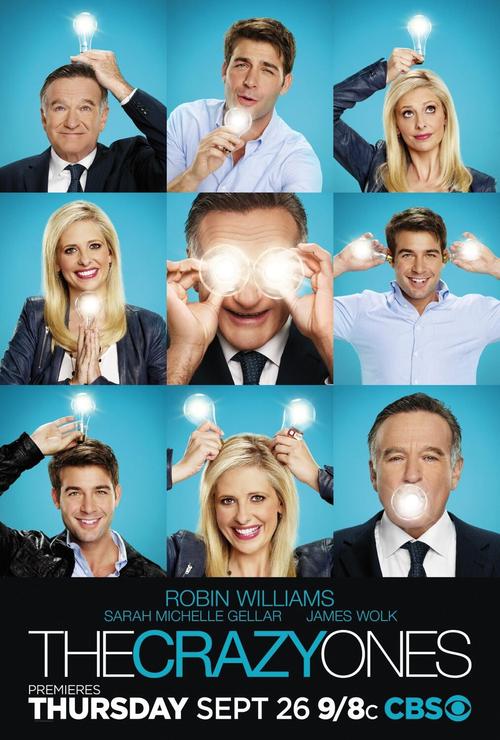
The Crazy Ones, revolves around the dynamics between a father named Simon Roberts (Robin Williams) and his daughter named Sydney Roberts (Sarah Michelle Gellar) set in the world of advertising. Sydney Roberts´s character can be described as pretty, intense, driven, organized and burdened with being practical. She is the creative director and life and soul of the Roberts and Roberts Advertising Agency at the center of the CBS comedy. She wants to be her father but is too busy having to parent him. However in the pilot the fictional ad folks are working on a campaign for McDonald's, one of Burnett's biggest clients. While I don't know what the offices of Leo Burnett look like, I'm sure they'll be a few similarities here and there. I'm excited to see the show though....

Monday, August 5, 2013

Dove: to photoshop or be natural?

Just recently I read this article called, "Dove Canada Uses Photoshop Trojan Horse to Shame Potential Body-Shamers," I noticed it when the article appeared on my news feed on LinkedIn and it caught my attention. While I don't use any of the Dove products I think its great how the company, I think it is great how the company embraces the genuine beauty of women. As a curvy girl myself its hard in todays society to feel "sexy" when all the models in magazines and TV are super skinny. But over the years I've learned how to feel sexy in my own skin. The fact that Dove created a campaign that made women feel comfortable in the skin their in was a fabulous statement to prove to society that you don't have to be a size 2 to be beautiful. But just recently their Canadian campaign, has added a Photoshop action that makes part of the campaign's image fake. While I think its okay if you airbrush a zit, is it really okay to Photoshop/airbrush your entire body? Kind of an oxymoron? I don't know what to think, but I've lost respect for Dove and this campaign

Sunday, August 4, 2013

What to wear on the job

While I usually write about media and communications I decided to share another interest of mine with you. Recently I interviewed at fashion public relations firms where they asked me to write a blog post about beauty trends. I really enjoyed writing it and I thought I would share it on my own blog. So take a look:

Starting a new job is like the first day of school; you go through your closet trying to create the perfect outfit for your first day. But whether your at school or work there are few must items that are few necessities you need to make your outfit complete:

1. Comfy shoes are necessity whether your walking across campus or running all around the office doing administrative duties. While I would love to be wearing stylish stilettos, there is absolutely no way I can wear a pair of strappy pair of stilettos for 10 plus hours. However this doesn't mean you have to sport your Nike running shoes, some alternatives are a great pair of flats or sandals that don’t cut into your skin, or a pair of cute and casual sneakers.

2. A Long Lightweight Cardigan may seem unnecessary in the middle of the summer, but the AC in your office may be freezing and you need a cardigan to keep you warm.

3. A Blazer is a great way to help you attain that polished look. Whether your working in a corporate environment you may want to wear a solid color such as black or navy, with a tailored fit. While it's important to look professional, if you work in public relations, advertising, marketing or fashion company, experimenting with colored blazers (white, light pink, red) not only makes your outfit pop, but definitely shows off your creative side.

4.
The Messenger Bag is both fashionable and functional. How can you go wrong?

5. The Watch: Pulling out your cell phone every other minute to check the time and your messages is not only rude, but it wastes your body. A watch is a great way to make your outfit sparkle!

Now that your ready, show off that outfit that makes you feel confident and comfortable at the same time.

Wednesday, July 31, 2013

Technology and Media Changing Throughout the Years

          Technology has been rapidly changing throughout the years. Companies like CBS  started out using media such as the radio during the 1920s and started using other forms of technology when times were changing . By the 1950s the television was invented and CBS created a television channel to reach an audience. However as people start stating their opinions through news pieces and create television shows with different type of storylines, people loose their sense of sense. In other words they don't follow the bear of their own drum and agree with everyone else within that point of view. Neil Postman is an American author, media theorist and culture critic who believes that technologies such as television discourage critical thinking. By using the concept called technological determinism, Postman believes that technology itself is an inate characteristic, which is the driving force for social change.
          Jason Gross is a freelance web designer, who is focused on creating clean and user friendly websites. He posts articles about tehnology and media in SMASHING Magazine. SMASHING Magazine is a website and blog offers resources and advice to web developers and web designers. On July 4, 2011 Gross posted an article called The Medium is the Message.  The aricle starts off by mentioning about how we communicate with one another and how it defines who we actually are, which makes us unique individuals in our culture. This is shown through a wide variety of channels that has evolved media over the century from print to radio to television to the Internet. Each one of these channels or medias has its own unique charactistics, just like the people who use them.
        Just like Neil Postman, Marshall McLuhan ws a Canadian educator, philosopher, and scholar. Before he died, McLuhan was a professor of English literature, a literary critic, a rhetorician, and a communication theorist. McLuhan's work is viewed as one of the cornerstones of the study of media theory, in addition to being one of the practical applications in the advertising and television industries. As McLuhan introduced a number of observations about the impact of news forms of media and technology. An expression McLuhan came up with "the medium is the messge" has an impact in mass media. The phrase sums up a much deeper communication theory, which means that the medium we choose to communicate with has as much, if not more, the value of the messahe itself.
        I agree with both Neil Postman's point of view as well as Marshall McLuhan's point of view because both men believe that media has drastically changed over the years. They both state that people use these types of media not only to entertain themselves but makes their opinions change as well. While we in a socially use media to communicate on a social level, people also use media to persuade peoples opinions, which make them unable to make their own decisions. It may not be fair, but the fact is media is present in our society and it's not going away any time soon. So we might as well get use to it!

Wanna read Jason Gross' article?

Tuesday, July 30, 2013

The Rise of the Internet

According to McChesney’s “Will the Internet Set Us Free?” the rise of the Internet will not diminish the power of commercial mass media. McChesney does state, that the "Internet is crucial to the global integration of the economy and many see it as extraordinary social implications for global culture and poltics as well." In other words McChesney states that the internet helps throughout many subject in our society. He mentions that the United States  For myself, the Internet is a tool where I can do a number of things. It allows me to connect with old friends on facebook. Plus I can do some shopping when I'm unable to go stores that aren't nearby or use amazon. When I need to do research I can use GOOGLE to get search results or find where some place is by GOOGLE maps. I can read news stories and celebrity gossip online through websites such nytimes.com, bostonglobe,com, time magazine, or E! news. Or I can read some blog posts that can have political aspects or for entertainment (ie Perez Hilton). In addition if I missed a recent episode of one my favorite TV shows, I can watch it online I can search for it on sidereel or look it up on Hulu's free video watching site xfinity. Nonetheless if I want to watch something amusing or figure out how to do something I can always go on youtube. However if I don't feel like doing none of the above, I can find free games to play online ranging in a number of categories. The truth is the Internet is like an department store for entertainment, where you can find a plethora of things

Monday, July 29, 2013

Copywriting and History

Throughout history copyrighting has changed drastically. Copyright can be defined as the exclusive right to make copies, license, and otherwise exploit a literary, musical, or artistic work, whether the media used is printed, audio, video, etc,. However between 1790 amd 1978 the average copyright term was 32 years, but due to legal changes very little has entered the public domain since 1928. Nonetheless since 1960 copyright has been extended 11 times by Congress. With the emergence of the mass media industry meant institutional protection for much of our culture. However many acts have been created to extend copyright protection such as the Sonny Bonno Copy Term Extension Act of 1998 also known as the Mickey Mouse Protection Act. The Act extended terms to life of the author plus 70 years and for works of corporate authorship to 120 years after creation or 95 years after publication. In addition the Digital Millenium Copy Right Act (DMCRA) made it a crime to circumvent any technical measure that controls access to copyrighted digitial work. It also prohibits creations and distributions of technologies that can bypass copy protection measures and sharing information about them. In a recent article from the New York Times titled, "Stop the Great Firewall of America"  talks about how the Protect IP Act protects American intellectual property. The article talks about recent laws about copyright and how infringement of how creative works through the Internet are justifiable. While people are allowed to express thair freedom of speech through the first amendment of the constitution,  creativity and expression it is not only hard to express, but even harder to protect becuase of restrictions and limitiations. Even though it may not be fair the copyright policy has changed over time because of how media has changed in our society.

Sunday, July 28, 2013

New Media and the Cold War

As the United States battled with the Soviet Union during the Cold War period, both countries created the context for the development of the computer and internet technology. Even though the government did not interfere with free market and free trade, it created low taxes for corporations. However the rise of the surplus created to give away different class differences, some people worked and some people did not. Some forms of capitalism emerged on the margins of feudalism
such as finance capital and merchant capital, which along the printing press and the nation-state. Emergence of industrial capitalism during the 19th century in Europe and in the United States helped evolved telecommunication networks. But as the 19th century continued the development of new technologies helped maximize profits, minimize the risks, and minimized the cost of production.

While decades past the United States and the Soviet Union were still battling one another in the Cold War, but by the end of President Ronald Regan's term the Cold War came to an end. Ronald Regan was elected in 1980, he had more than 7% of the popular vote and won the electoral vote 489 to 49. Nonetheless, while serving in office Regan he passed on economic policy which instiuted the idea about cutting taxes and and social services. In addition Regan created a social policy where he allied himself with Christian Fundamentalists who were against abortion, drugs, and homosexuality. However Regan dealt with Cold War anxieties, but intervened millitary in Central America and the Middle East.

The new economy started during the 1990s and was intended to increase productivity and lower employment. The new economy wanted to replace old technologies with new technologies. However there were myths about the new economy during the 1990s. There were two ideas generally associated with  the new economy. The first idea states that the new economy is contended to consume a new technological revolution. However the second idea suggests that it is often suggested that the new economy has attenuated if not eliminate the business cycle. The relationship between the internet and productivity is that the internet is a distraction and is a cheap system that experise systems are servicing. When developing the internet institutions that played a key role were millitary, government, research centers, universities, and private corporations. However three key areas that were developed in order to start the internet were microeconomics, computers, and telecomminications. With the help of Tim Berners Lee the world wide web (www) was invented, but Berners-Lee never made a dime of the world wide web because he never pattoned it.

Floyd Norris a reporter for the New York Times, wrote an artice called, "How Telecom became a Blackhole," disscusses how telcom technologies in different countries are under pressure to cancel a similar offering of its wireless unit. How to become a blackhole However Charles Clough of Clough Capital, a money management firm, stated that weaker firms are failing "Piece by piece, they are starting to default up the chain," While large companies sold equipment and have some customers who can't pay, while others are trying to raise cash by selling used equipment that they can't afford to keep. In the end, Norris is optimisitic that there will be hope and the economic shakedown will be shoet.  

Wednesday, July 24, 2013

The Internet and Journalism

Over the years, there has been significant debate about the role of the internet in both harming and helping journalism. Journalism today is more than just different from what it was in the past. Today's society is much more dependent on online communication becuase of lightening speed technology journalistic practices have become hasty and superficial. Since society wants information in milliseconds after an event has occurred or an important decision has been made, our desire to recieve news immediately has prevented journalists from digging deeper into sabout tories and from establishing essential personal connections with sources. However the future of newspapers has come into question in recent years. The industry has faced down soaring newsprint prices, slumping ad sales, the loss of much classified advertising and precipitous drops in circulation, but will the industry ever be able to recover?  In recent years the number of newspapers slated for closure, bankruptcy or severe cutbacks has increased. This has occurred especially in the United States, where the industry has shed a fifth of its journalists since 2001. Even the revenue has plunged and the competition of the internet media has squeezed older print publishers. However since the beginning of 2009, the United States has seen a number of major metropolitan newspapers go out of business. Some newspapers that have closed are The Rocky Mountain News. While some newspapers have started using the internet to publish their articles, so readers can still get their news on a free media. An article from The Economist titled, "Who killed the newspaper?" talks about when journalism was at its peak and how for the most part newspapers have lost to the internet. The article also talks about how advertising is following readers out the door and how employment in the journalism industry has declined 18% between 1990 and 2004, making it a hard business for recent graduate students to become employed in. A youtube video I found  titled Internet Journalism talks about how the internet has changed the way people communicate with one another and the impact its had on journalism. Soon newspapers will become completely obsolete and will be ancient history because everything will be digital and online.

Tuesday, July 23, 2013

New Media and Pornography

While times are changing new media has assisted in the proliferation of pornography, with strong social consequences. Nonetheless, many people claim that pornography should be protected by the First Amendment. Other people argue that since women are willing to participate in pornography, then it's automatically their choice. But what if women didn't have a choice? What if she started prostituting at a young age and couldn't change their career path? Even though were in an economic crisis the pornography has not suffered. If people are willing to pay  to watch other people to have sex with one another why should we object? It's not like their sitting on a park bench jerking off in public, most people do it in the privacy of their own bedrooms.
A court case that deals with the issue that pornography should be protected under the first amendment is ABA v. Hudnut. The 1985 court case challenged the Anti-pornography Civil Right Ordinance, which was enacted in Indianapolis, Indiana. Indianapolis enacted an ordinance defining "pornography," as material that depicts erotic behavior and is intended to cause sexual excitement. Pornography" under the ordinance can be defined as a graphic sexually and explicit subordination of women, whether in pictures or in words, also can include one or more of the following:
  1. Women are presented as sexual objects who experience sexual pleasure in being raped;
  2. Women are presented as sexual objects who can be tied up, cut up, mutilated, bruised, physically hurt, or as dismembered/truncated/fragmented/severed into body parts
  3. Women are presented in scenarios of degradation, injury abasement, torture or they can be displayed as filthy, inferior, bleeding, bruised, or hurt in a context that makes any these conditions sexual;
  4. Women presented as sexual objects who enjoy pain or humiliation
  5. Women are presented as being penetrated by objects or animals
  6. Women are presented as sexual objects for domination, conquest, violation, exploitation, possession. However women can also be presented through postures, positions of servility, submission or display
Nonetheless this statute provides that the use of children, men, transsexuals, can substitute women in This case was first heard by the United States District Court for the Southern District of Indiana. However petitioners appealed the case to the United States Court of Appeals for the Seventh Circuit. Nonetheless one person involved in the case, Judge Easterbrook held that the ordinance's definition and prohibition of pornography was unconstitutional. The ordinance didn't refer to the prurient interest, which is required in the obscenity statutes by the Supreme Court's ruling in the case Miller v. California.  Which states that the state law must clear and specific in describing the sexual conduct covered by the obscenity legislation. In the end the court ruled that the ordinance that defined pornography through the reference of portraying women and for that the court held it unconstitutional because the first amendment means that government has no power to restrict the freedom of expression due to the messages or ideas.  
In my opinion we should not judge people because what they do for a living is wrong. In a bad economy people will do anything to make a buck, so they can put food on the table and a roof over their heads. It's similar to the expression, "Don't judge a book by its cover because you never know what's inside." While what they may be doing is against your morals and beliefs, a good amount of it is acting, which many people forget to realize. And while other people are struggling to make a living the porn industry is one of the few industries during this economic rough patch that has not been effected. Maybe we should be applauding them because these people are able to make a living during this economic rough patch. But the truth is some people don't like porn and other people love porn.

Monday, July 22, 2013

Facebook and Marketing: Should they be punished for their actions?

Ever wonder how Facebook gets its advertisers? And when you look at your newsfeed you see how detailed the advertisements are to your common interests? While you may enjoy some of the advertisements on your newsfeed, is it worth your privacy Facebook being hacked? It's not right for advertisers to pay money for your Facebook profile.  But should they be punished for selling your information? It's just a business deal for them.
During the past ten years social networking sites have become increasingly more popular on the internet. Social networking sites like Facebook have accelerated the commodification of audience or user labor. However we the user do not realize how we are used for labor purposes. What we the do not realize is that when click on something we"like" it sends a message to the company which will show more adds on the side of our facebook wall.  In the end, all a person's profile is to facebook is only a representation of of you so they sell information to advertisers, so those advertisers can advertise to that profile. Nonetheless is it fair for this social networking site to allow advertisers to market their products through someone's profile?
ABSOLUTELY NOT. In my opinion it's an extreme invasion of privacy, we usually use this site to communicate with people, not buy random products that we won't end up using. According to an article from FORBES magazine calls What Facebook's FTC Privacy Settlement Means to Marketers, clearly says, "Facebook “deceived consumers by telling them they could keep their information on Facebook private, and then repeatedly allowing it to be shared and made public.” Even though we think our information is privae it's actually public, however were not celeberties or public officals, so why should facebook be allowed to share our information with advertisers and marketers?
Even though social networking sites allow shy and quiet people to spread their wings and become more social within a technological society, it allows these individuals to become empowered. But should these people be allowed the empowerment? While people should understand that marketers and advertisers help facebook stay a float, do they have to take it to the next level and invade a facebook user's privacy? Next we'll here that a facebook user is suing facebook and the marketer/advertiser for going into debt and filing chapter 11 bankruptcy. It's just like McDonald's being blamed for the obesity epidemic in America, Does facebook really want to be blamed for debt for American civilians?

Sunday, July 21, 2013

Can social media impact social movements?

Wow! I realized I haven't updated this blog in over year. Time sure does fly I must say. But a lot has happened over the past year; some good and some bad. One good thing: I graduated SUNY Oneonta with a degree with a Bachelors in communications and a minor in public relations. But one bad thing: trying to find a job in this economy has not been easy.
But lately I've been addicted to the HBO TV hit show called The Newsroom. One episode did remind me of a blog post I wrote for my new media class regarding social media and social movements. It was the fifth episode of the first season. The action begins on February 10, 2011, while News Night is covering unrest in Egypt following President Mubarak’s refusal to resign.
This episode reminds me that in our society there are many ways for people to communicate with one another. The truth is social networking sites have become a much more popular way for people to communicate with another. The use of these social networking websites has increased as well over the past decade. People not only used social networking websites to communicate with one another, they can connect to network professionally, and to spread awareness and news for social movements. One example is if social networking sites being used in social movements is in Egypt when a revolution broke out. The country was able to gather their support for what they believed in on Facebook. They rallied together online for support to make their point. Time Magazine published an article January 24, 2011 titled "Is Egypt About to Have a Facebook Revolution?." The article talks about a campaign of non-violence and civil resistance, which featured a series of demonstrations, marches, acts of civil disobedience, and labor strikes discusses how several Facebook groups were created. This resulted with the Egyptian government shuingt down internet access for most of the country. While this was done to cripple one of the main organizational tools, it impeded the flow of news and people. This showed how one whole country could unify through new media, Egypt was able to show the entire world that new media such as Facebook is able to connect and unify people in different places.

Monday, March 26, 2012

There's no carnival on the seven seas

         Over the years when an organizatation experiences a crisis that catches national media attention, it erupts like a volcano throughout the news and social media, which intrigues me. However when it's an organization that has millions and is suddenly on the verge of loosing it all, making the public become aware of what they are doing to handle the situation can reassure the public's trust.
        
       After Carnival Cruises, one of the fast-growing cruise companies faced one of its biggest tests in years after the Costa Concordia disaster off the coast of Italy, the public relations campaign took a hostile turn, by not ensuring customers what the company was doing to resolve the issue.Instead the company is now offering a 30-percent discount for shipwreck survivors on future cruises.  However offering a discount for shipwreck survivors on future cruises is not an appealing marketing approach because after all that trauma people endured, why would you want to go on a cruise with Carnival again?

     I wouldn't want to go on a cruise with them after this situation, would you? However if the company stepped up and reassurred the public that they were taking the necessary measures to make their cruises a much more safe environment for people to vacation with them, than I may recondsider. In my opinion what the cruise line should have done the following to difuse the situation:
  • Tell the Public that they are aware of what happened in Italy
  • Tak responsibility for the Captain's actions and assuring the public that this will never  happen again
  • Mandatory meetings for all crew members on all their ships to go over emergency procedures
  • Try to find clients who enjoyed their vacation with Carnival Cruises, and ask them to do some sort of advertisement with the company
  • Possibly do a step-by-step campaign to show the public what their doing to fix the problem
I can't help but wonder if they were prepared for this type of situation, how this could of played out differently?

I guess I'm just going to have to wait and see what happens in the future with Carnival Cruises....

Tuesday, March 6, 2012

Pintrest

          Social media has become increasingly popular over the past five years. It all began when Tom created Myspace, then Mark Zuckerberg created Facebook. A few years ago Twitter was created abd gas become increasingly popular. Now a days Pintrest is the new "it" social media.

But what exactly is Pintrest?

          From my understanding its a virtual pinboard. This pinboard allows you to style a social photo sharing website. It  allows users to create and manage theme-based image collections. The site's mission statement is to "connect everyone in the world through the 'things' they find interesting." It's looks reakky cool from what I have seen through people's accounts on Facebook.

             However you need to be invited to get a pintrest. There's even a waiting list where you can add your email address. It's like Facebook when it first began. And I want an invite!!!